
In large-scale industrial production, evaporating massive volumes of water traditionally demands enormous energy to generate steam. The multiple-effect evaporator transforms this process by cascading energy reuse across serially connected evaporators. A multiple-effect evaporator uses secondary steam from one effect as the heating source for the next, slashing energy consumption while boosting output. Understanding the working principle of a multiple-effect evaporator helps industries optimize cost and efficiency in long-term operations. From the working principle of the multiple-effect evaporator to its diverse applications, this system stands as a cornerstone.
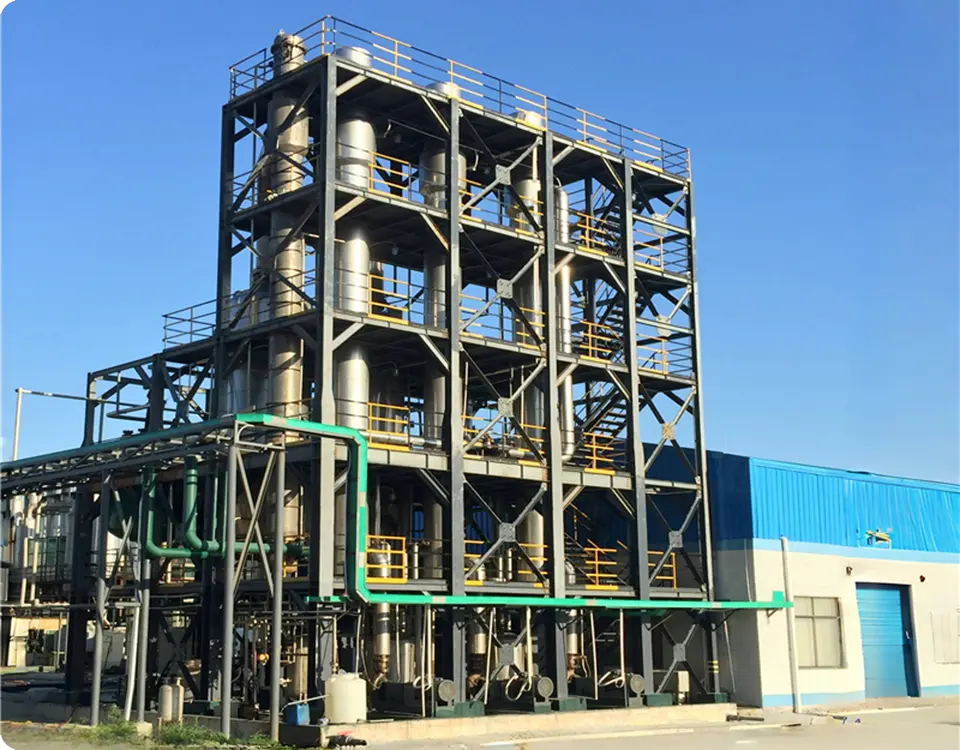
The multiple-effect evaporator features a series of interconnected evaporation units, or "effects," each comprising an evaporator, condenser, and heater. According to the working principle of a multiple-effect evaporator, each effect harnesses steam from the previous one to heat the liquid, promoting evaporation. This structured design supports multi-stage liquid processing, highlighting the practical uses of multiple-effect evaporators in efficient, scalable operations. The design and construction of multiple-effect evaporators directly influence their performance. By combining robust engineering with intelligent design, the construction of a multiple-effect evaporator defines performance standards across modern industrial plants.
The definition of multiple effect evaporator describes a thermal evaporation system designed to maximize energy efficiency by reusing vapor from one stage to heat the next. A clear understanding of the definition of a multiple-effect evaporator helps engineers determine the number of effects, flow configuration, and operating conditions required for different industrial processes. Optimized construction of multiple-effect evaporators ensures stable operation, efficient steam utilization, and consistent product quality. Advanced automation and monitoring systems are increasingly integrated into the construction of multiple effect evaporator to enhance operational efficiency.
The working principle of multiple effect evaporator is based on the efficient reuse of thermal energy. At the core of the working principle of the multiple-effect evaporator is the concept of thermal cascading — meaning heat is reused across multiple evaporation stages. Here's how the multiple-effect evaporator operates:
The working principle of the multiple-effect evaporator incorporates depressurization, lowering pressure and temperature in successive evaporators. As a result, secondary steam from the prior evaporator becomes the heating medium for the subsequent one, with the latter's heating chamber serving as the former's condenser. By sequentially linking evaporators, this system enables cooperative operation, reusing secondary steam and enhancing heating steam utilization — a hallmark of the working principle of the multiple-effect evaporator. This design ensures minimal waste, aligning with the use of multiple-effect evaporators in industries where energy efficiency is paramount.
In modern industries, understanding the working principle of a multiple-effect evaporator is essential for improving efficiency. Because of this efficiency, the uses of multiple effect evaporator are widely recognized in processes that require large-scale liquid concentration and solvent removal. Today, the working principle of a multiple-effect evaporator is not just theory but real-world practice in thousands of plants. To sum up, the working principle of a multiple-effect evaporator is simple yet powerful.
Central to the working principle of multiple effect evaporator is efficient steam transfer combined with continuous heat reuse. In the first effect, an external heat source — typically live steam — provides the energy required to initiate evaporation. The vapor generated during this process is not discharged; instead, it becomes the heating medium for the second effect. This sequential heat recovery defines the working principle of multiple effect evaporator, where steam condensation releases latent heat that drives further evaporation across diverse evaporation applications.
By transferring vapor from one effect to the next, the system minimizes energy loss and significantly lowers steam consumption. This cascading heat utilization explains why the use of multiple effect evaporator are strongly associated with energy-efficient industrial operations. As steam is recycled across effects, the applications of multiple effect evaporator expand to processes that demand continuous operation with reduced thermal input.
Our cutting-edge solutions harness the working principle of a multiple-effect evaporator to ensure sustainability and scalability. By maximizing heat recovery, this technology supports long-term operational efficiency, making the use of multiple effect evaporator particularly attractive for large-scale production environments. Industries seeking stable output and reduced energy costs increasingly rely on the proven applications of multiple effect evaporator. Explore the advantages of multiple-effect evaporators today:
Energy Savings: One of the most significant advantages derived from the working principle of multiple effect evaporator is substantial energy reduction. Only the first effect requires external steam, while subsequent effects utilize vapor generated internally. This design dramatically lowers total heat input, reinforcing the economic and environmental uses of multiple effect evaporator. In energy-intensive industries, the applications of multiple effect evaporator consistently demonstrate reduced operating costs and improved resource efficiency.
Higher Thermal Efficiency: Steam recycling is fundamental to the working principle of multiple effect evaporator, enabling small temperature differences between effects and uniform heat transfer. This controlled thermal environment reduces heat loss and accelerates evaporation rates. As a result, the use of multiple effect evaporator extend to time-sensitive manufacturing processes where efficiency and consistency are critical. These performance advantages further broaden the applications of multiple effect evaporator across diverse industrial sectors.
The working principle of the multiple-effect evaporator enables its broad applications in various fields. These uses of multiple-effect evaporators leverage their multi-stage design for sustainability, aligning with the working principle of multiple-effect evaporators to cut emissions and operational costs.
The working principle of the multiple-effect evaporator enables its broad applications in various fields. These uses of multiple-effect evaporators, supported by reliable multiple-effect evaporator suppliers, leverage their multi-stage design for sustainability, aligning with the working principle of multiple-effect evaporators to cut emissions and operational costs.
One of the most established applications of multiple effect evaporator is in core process industries such as chemicals, food, and pharmaceuticals.
In the chemical industry, the uses of multiple effect evaporator include concentrating chemical solutions, recovering solvents, and purifying intermediates. These applications support high-throughput production while reducing operational energy demand.
In the food industry, common applications of multiple effect evaporator involve sugar refining, syrup concentration, and juice processing. The use of multiple effect evaporator allows efficient moisture removal while maintaining product quality and consistency.
In the pharmaceutical sector, the applications of multiple effect evaporator focus on concentrating active ingredients and reclaiming high-value solvents. These uses of multiple effect evaporator are especially important for controlled and repeatable production processes.
Environmental management has become a major driver for the growing use of multiple-effect evaporator systems.
In wastewater treatment, the applications of multiple effect evaporator help reduce liquid waste volume and recover reusable water. These uses support cost reduction and compliance with environmental regulations through advanced waste water evaporator system solutions.
In desalination, the use of multiple effect evaporator enable efficient separation of freshwater from saline sources. Such applications of multiple effect evaporator optimize resource utilization and are increasingly adopted in water-scarce regions.
With customized configurations and materials, the applications of multiple effect evaporator extend into newer industrial sectors.
In biofuel production, the uses of multiple effect evaporator include concentrating fermentation broths and recovering bio-based solvents, improving overall process efficiency.
In mining and metallurgy, the applications of multiple effect evaporator focus on concentrating leach solutions and recovering valuable minerals. These uses of multiple effect evaporator are designed to perform reliably under high-load and corrosive conditions.
By fully leveraging the working principle of multiple effect evaporator, industries achieve energy conservation, waste minimization, and product enhancement. The wide uses of multiple-effect evaporator demonstrates the system’s remarkable versatility, energy efficiency, and adaptability across multiple industrial sectors. Whether for energy conservation, waste minimization, or product enhancement, multiple-effect evaporator uses continue to define the future of sustainable industrial performance. The diverse uses of multiple-effect evaporators reinforce their position as a cornerstone technology for modern process industries.
Understanding the working principle of the multiple-effect evaporator is crucial for selecting suitable equipment. High-quality multi-effect evaporators ensure high work efficiency and low energy consumption. The working principle of the multiple-effect evaporator demonstrates how to efficiently and energy-savingly accomplish evaporation tasks through multiple effects. When selecting suitable equipment, enterprises should consider factors such as thermal efficiency, energy consumption, and equipment maintenance according to their specific needs.
By investing in equipment built on the working principle of a multiple-effect evaporator, factories gain efficiency. The working principle of a multiple-effect evaporator is a proven method for energy saving. As an established industrial evaporator manufacturer, we specialize in designing high-performance evaporation systems tailored to rigorous industrial demands. Our multi-effect evaporators combine advanced engineering with durable construction. Explore advanced multiple-effect evaporator solutions today!


 EN
EN
 jp
jp  ko
ko  fr
fr  de
de  es
es  it
it  ru
ru  pt
pt  ar
ar